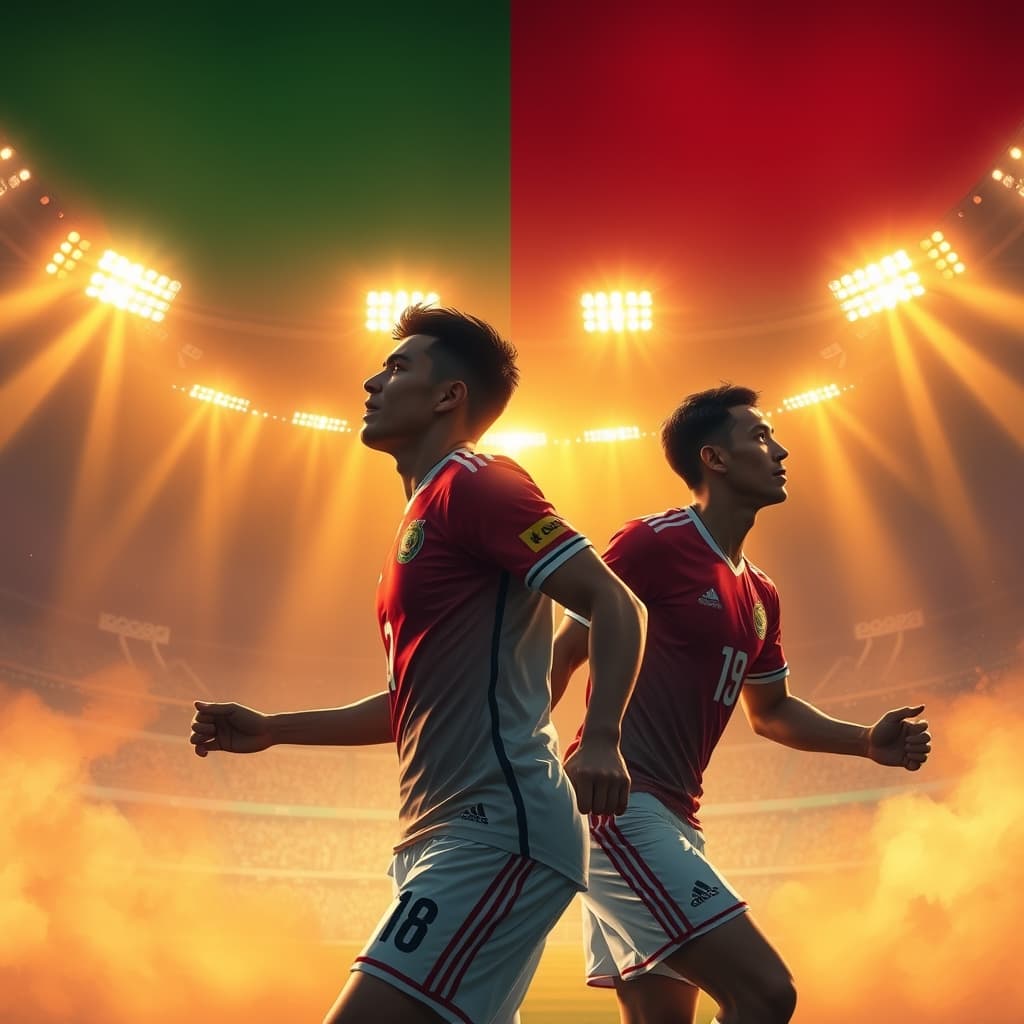
The FIFA World Cup 2026 has concluded, with Spain emerging victorious over Argentina in a tightly contested final. The tournament, co-hosted by Canada, Mexico, and the United States, saw a record 48 teams compete across North America.
Mexico Appoints Rafael Márquez as New Head Coach
Following Mexico's elimination from the FIFA World Cup 2026 in the Round of 16, the Mexican Football Federation (FMF) has announced the appointment of Rafael Márquez as the new head coach. Márquez, a legendary former player for El Tri and FC Barcelona, takes over from Javier Aguirre, whose tenure concluded after the team's 3-2 defeat to England. The transition was part of a pre-existing succession plan, with Márquez having served as Aguirre's assistant coach since his return to the national team. Márquez expressed his gratitude to Aguirre and emphasized continuity in the team's long-term project. Aguirre himself endorsed Márquez, stating that the new coach is "more than qualified" and will prove his capabilities. This marks a new chapter for Mexico, aiming to build on the legacy of their previous coach with a squad featuring a blend of experienced players and emerging talent.
Spain Clinches World Cup Title in Dramatic Final
Spain has been crowned champions of the FIFA World Cup 2026, defeating defending champions Argentina 1-0 in a tense final held in New Jersey. The decisive goal came in extra time, with Spain securing their first World Cup title since 2010. The match saw a significant defensive setback for Argentina when center-back Lisandro Martinez was forced off with a thigh injury in the first half. Despite the loss, Argentina's Lionel Messi became the oldest outfield player to start a World Cup final at 39 years and 25 days. The final's viewership in the United States shattered records, with nearly 63 million Americans tuning in, underscoring the growing popularity of football in the country.
Tournament Highlights and Player Performances
The 2026 FIFA World Cup, with its expanded 48-team format, provided numerous compelling narratives and standout performances. Kylian Mbappé of France continued to impress, leading the race for the Golden Boot with significant goal involvements throughout the tournament. England achieved their best World Cup finish since 1966, securing a remarkable third-place finish after a high-scoring 6-4 victory over France in the bronze medal match. Bukayo Saka scored a hat-trick in that match, becoming the second England player to achieve this feat in a World Cup knockout stage. For Spain, teenage sensation Lamine Yamal played a crucial role in their semi-final victory over France, despite an earlier "hard knock" that raised injury concerns. Manchester United's Kobbie Mainoo concluded the tournament without playing a single minute for England due to a back injury sustained in training.
Expanded Format and Knockout Stage Qualification
This edition of the World Cup was the first to feature 48 teams, with 32 advancing to the knockout stage. The qualification for the Round of 32 included the top two teams from each of the 12 groups, along with the eight best third-placed finishers. FIFA established specific criteria to rank third-placed teams, prioritizing points, then goal difference, then goals scored, followed by disciplinary records and FIFA World Rankings. This expanded format aimed to increase global representation and provide more nations with a chance to compete on the world stage.
What it means
The conclusion of the FIFA World Cup 2026 marks a significant moment in international football. Spain's victory adds another chapter to their history, while Argentina's strong performance, despite falling short in the final, highlights their continued prowess. The tournament's expansion to 48 teams proved successful, increasing global participation and offering more opportunities for diverse footballing nations to showcase their talent. The record viewership in the United States further solidifies football's growing appeal in a key host nation. The managerial change in Mexico with Rafael Márquez taking the helm signifies a new era for El Tri, with expectations high for the legendary player to lead the team forward. The tournament also provided a platform for emerging stars like Lamine Yamal and established talents like Kylian Mbappé to shine, while also highlighting the challenges faced by players like Kobbie Mainoo due to injury.
What's next
With the 2026 World Cup concluded, attention now turns to future tournaments and the ongoing development of national teams. The focus will shift to qualification campaigns for the 2030 FIFA World Cup, which will be co-hosted by Morocco, Portugal, and Spain, with additional centenary matches in South America. For Mexico, the immediate future involves Rafael Márquez integrating his vision and tactics with the current squad, aiming to build a competitive team for upcoming competitions. Player development will remain a key focus for all nations, with younger talents like Lamine Yamal and Kobbie Mainoo expected to play increasingly significant roles for their respective countries in the coming years. The success of the 2026 tournament, particularly in terms of viewership and global engagement, suggests a continued growth trajectory for football, with FIFA likely to build upon the expanded format for future editions.
Kickoff XI is an independent publication and is not affiliated with FIFA.
Watch
https://twitter.com/miseleccionmxEN/status/2054323346179788983